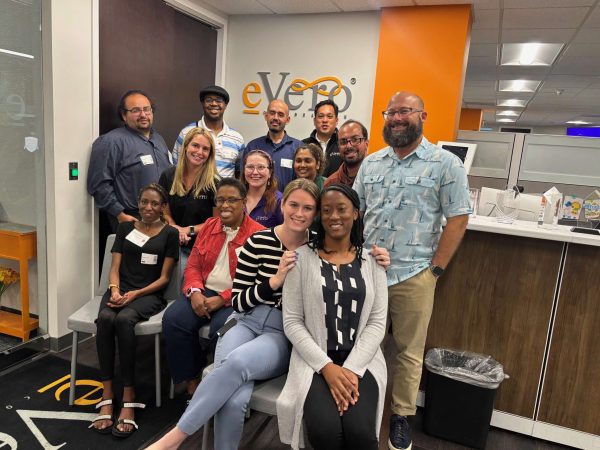


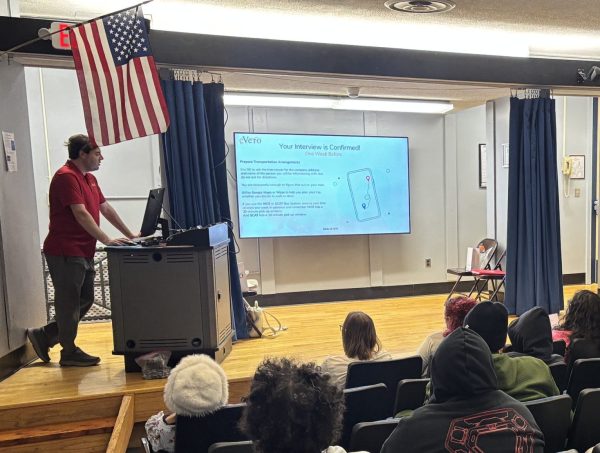
Scott leads a “Hire Me!” workshop this month at Nassau BOCES Rosemary Kennedy Center
Every April, Autism Acceptance Month invites us to move beyond simple awareness and toward meaningful understanding, inclusion, and respect for autistic people. While awareness focuses on recognizing autism’s existence, acceptance asks something deeper of society: to value autistic individuals for who they are, embrace neurodiversity, and remove barriers that limit opportunity, dignity, and belonging. It helps individuals to understand the reality of acceptance rather than awareness because it’s more of shying away from their own shadows.
Understanding Autism and Neurodiversity
Autism, or Autism Spectrum Disorder (ASD), is a lifelong neurological difference that affects how people communicate, interact with others, process sensory information, and experience the world. Because it is a spectrum, autism presents differently in every individual. Some autistic people are nonspeaking, others are highly verbal. Some thrive on routine, others enjoy spontaneity. Intellectual ability, sensory sensitivity, and support needs vary widely. Others are very interested in their hobby of a specific interest, like trains, music, art, and cartoons.
The neurodiversity movement emphasizes that these differences are a natural part of human variation, rather than deficits that need to be fixed. From this perspective, autism is not something to be “cured,” but understood and supported. Acceptance means recognizing strengths alongside challenges and allowing autistic people to define their own identities and needs. Neurodiversity can also have a different wiring in the brain compared to neurotypicals as they have a different way of communicating than their other peers. Some individuals are really smart, like a genius, and others have their limits when it comes to learning style or lifestyle at home.
From Awareness to Acceptance
Awareness campaigns have played an important role in bringing autism into the public conversation. However, many autistic self-advocates argue that awareness alone is no longer sufficient, as it primarily reflects past efforts rather than present needs. Despite increased visibility, autistic individuals continue to experience exclusion, misunderstanding, and discrimination even in environments that identify themselves as “autism-friendly.”
There is often confusion between autism awareness and autism acceptance, particularly during Autism Acceptance Month, which is observed every April. Acceptance moves the conversation beyond recognition and visibility by asking more meaningful questions: Are autistic voices truly being heard and respected? Are schools, workplaces, and public spaces designed to accommodate sensory and communication differences? Are supports and services provided in ways that prioritize dignity, autonomy, and inclusion? Autism acceptance emphasizes meaningful change and inclusive practices that center the lived experiences of autistic individuals, ensuring they are supported, valued, and empowered in all aspects of society. True acceptance leads to action like inclusive education, accessible employment, respectful healthcare, and policies shaped with autistic input, not just for autistic people, but by them.
Celebrating Autistic Strengths
Autistic people contribute meaningfully to society in countless ways. Many display exceptional focus, creativity, honesty, pattern recognition, technical skill, or deep knowledge in areas of interest. Others bring unique perspectives that challenge conventional thinking, benefiting fields such as technology, art, science, and advocacy.
During Autism Acceptance Month, it’s important to celebrate these strengths without creating unrealistic expectations. Not every autistic person is a savant or a tech genius, and that’s okay. Acceptance means valuing people regardless of productivity or perceived “special talents.”
Listening to Autistic Voices
One of the most important aspects of acceptance is listening to autistic individuals themselves. Historically, conversations about autism were dominated by parents, professionals, and institutions. While those perspectives matter, the autistic living experience must be central.
Listening can be as simple as respecting communication preferences (spoken language, typing, AAC, or silence), believing autistic people when they describe their experiences, avoiding stereotypes and assumptions, using identity-affirming language when requested (such as identity-first or person-first language), and there is no single “right” autistic experience, so acceptance means honoring diversity within the autism community.
How Individuals and Communities Can Practice Acceptance
Autism acceptance is not limited to April, it should guide our actions year-round. Everyone can play a role, like in schools, where Support inclusive classrooms, individualized learning approaches, and antibullying efforts. People can learn about Autism in workplaces that offer flexible schedules, clear communication, and sensory-friendly environments. Individuals can learn about society in public spaces which can reduce unnecessary sensory overload and provide quiet areas when possible. In everyday interactions, practice patience, kindness, and openness to differences, because many individuals have a different way of reacting than others are easy, and others could be sensitive. Most importantly, ask rather than assume. Small accommodations can make a profound difference in quality of life.
A Month and a Movement
Autism Acceptance Month is a reminder that progress is not measured by how much we know about autistic people, but by how well autistic people are supported, respected, and included. Acceptance recognizes that autistic individuals do not need to change to belong society does. By choosing understanding over judgment and inclusion over exclusion, we create a world where autistic people are not merely noticed, but welcomed and valued for exactly who they are.
“I’ve never viewed my Autism as a roadblock to success.
It’s not something to work around. It’s just part of who I am. There’s nothing bad about it”.
– Eva Erickson, Survivor contestant on the autism spectrum