

Technology Built from Trust: Systems Designed for the People They Serve
When it comes to providing human services, software is never just a tool. Behind every release, update, life plan, and visit verification is an individual with an intellectual or developmental disability (I/DD). Around them are families learning to navigate complicated healthcare systems, along with agencies and direct support professionals (DSPs) working to support them. All this happening within state and federal requirements that are complex and constantly changing. The technology used to manage care services must be designed to serve everyone while continuously supporting the individual.
If a platform is down when a caregiver needs to clock in, or when a care manager needs a report before a meeting, care delivery comes to a halt. A system must work. A missed clock-in can become a delayed payment, and a report that won’t load can hold up a decision about someone’s care plan. Providers and oversight agencies should be able to verify a platform’s health and security for themselves, which is why eVero keeps its Platform Status and Trust Center pages open to anyone, on any device. And when something does go wrong, clear, timely communication is nearly as important as the fix.
A platform must also reflect how services are delivered in-person. Community Habilitation, Respite, Supported Employment, Self-Direction, CDPAP, and crisis response each move at their own pace. A crisis response team cannot stop to click through a dozen screens during an active incident. Families managing Self-Directed services should not need to learn agency jargon to approve a timesheet. Workflows should match how each service runs in practice, not just on paper. With state and federal agencies funding services, setting the rules, and answering for outcomes, information needs to be clear, compliant, and correct; that kind of data readiness is what makes meaningful oversight possible. A platform should be able to flag missing or invalid entries before they become billing errors or audit findings. Because fixing a problem at the point of entry takes seconds, while correcting it months later during an audit or review can take days.
Many agencies run separate systems for payroll, HR, billing, and pharmacy, and those records may not align. eVero builds tailor-made integrations that bring those systems together, helping staff spend less time re-entering information, reconciling spreadsheets, and chasing discrepancies. That interoperability, with provider systems and state systems alike, creates one accurate view of every individual that the entire care team can trust: a single source of truth (eVero is Italian for “it is true”).
But even well-connected systems can fail if people find them cumbersome and hard to use. A DSP in the field, a self-hired staff member, and a parent managing a family member’s services all need the same up-to-date information. Platforms must work in real time on web and mobile, with accessibility designed in from the start. That means support for screen readers, adjustable text, and plain language, with interfaces that stay usable for people of all abilities and every level of comfort with technology.
With reliability, compliance, integration, and accessibility in place, care teams can begin to use AI responsibly. AI is only as trustworthy as the systems that protect it, the data behind it, and the people who use it. Used well, it can streamline a care team’s workload. eVero AI Assist turns notes that staff and caregivers have already written into Monthly Summaries, Response to Service reports, and POM Assessment summaries, freeing up time and better connecting the people who depend on the platform. eVero’s newest feature, document translation, makes that content available in more languages. Client data is processed in a protected, dedicated environment, and every draft is reviewed, edited, and confirmed by a user before it enters the record.
Like any new tool, AI takes some getting used to. When eVero first launched AI Assist, some staff were understandably hesitant. But comfort and confidence grew as they learned to treat each draft as a starting point and shape it until it truly reflected their work and care delivery. That experience reinforced a broader lesson: training is ongoing work. Regulations change, programs evolve, and people join and leave teams. A new direct support professional needs different guidance than a seasoned billing specialist, and both need to know when something in their daily workflow has changed. Training should be current, available on demand, and organized. eVero Ed and eVero University pair that kind of self-paced learning with live webinars, along with walkthroughs of quarterly and interim releases and modules that explain not just what changed, but why and how to implement it.
Each of these pieces depends on the others.
• Reliability gives people the confidence to trust the system.
• Thoughtful design makes accurate entry easier and more user-friendly.
• Accurate data makes integration and compliance possible.
• A trustworthy foundation makes it safe to introduce new tools like AI.
Together, they form infrastructure that is dependable, easy to use, and able to support informed decision-making, giving care teams what they need to provide thoughtful, effective care with less administrative burden. Supported with ongoing training and steady improvement, technology keeps the individuals being served at its core and gives providers more time with the people they support.
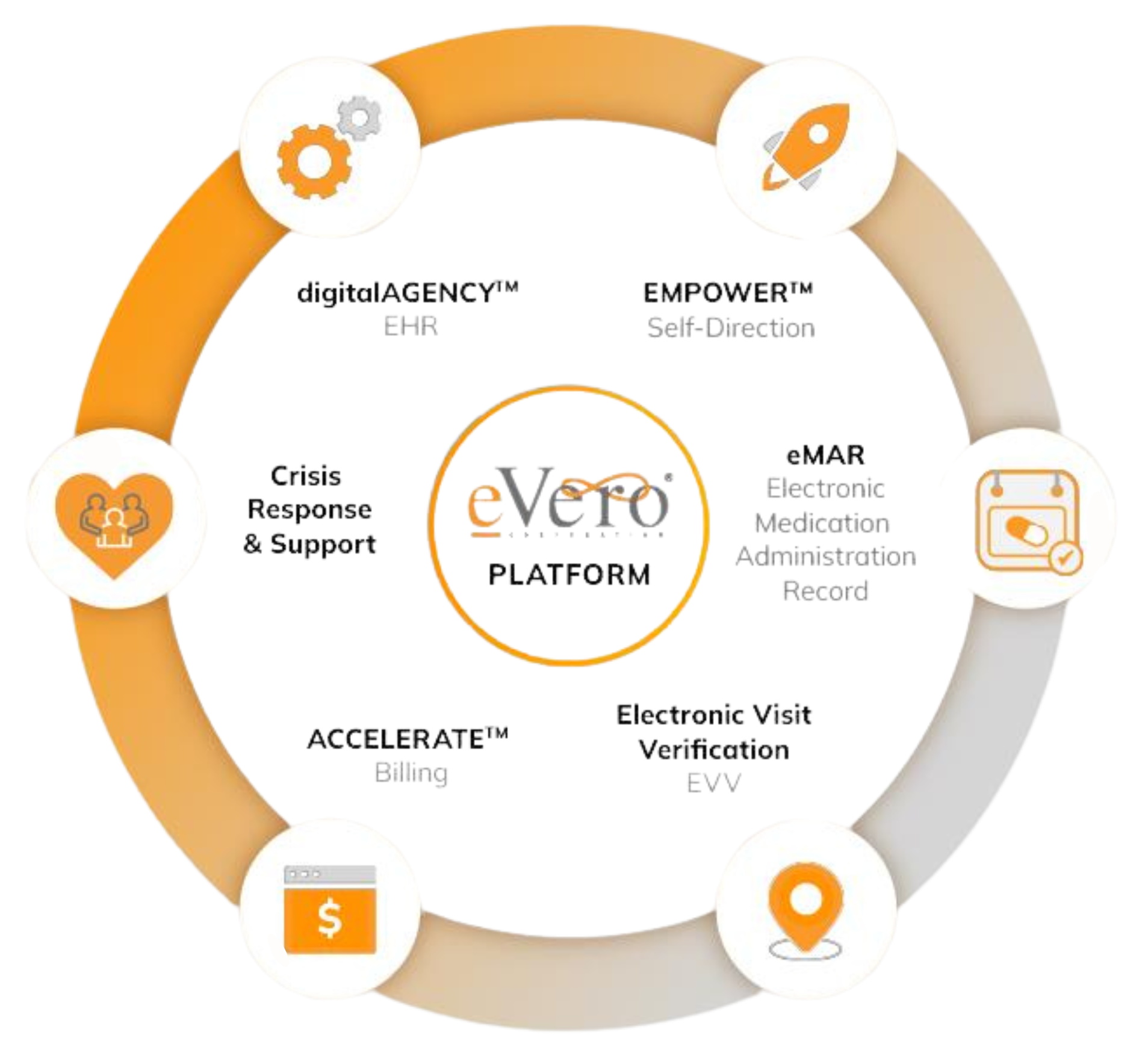
A single unified system where innovative technology meets human care. For more information on the eVero platform, please visit eVero.com or contact [email protected] to schedule a demo.