

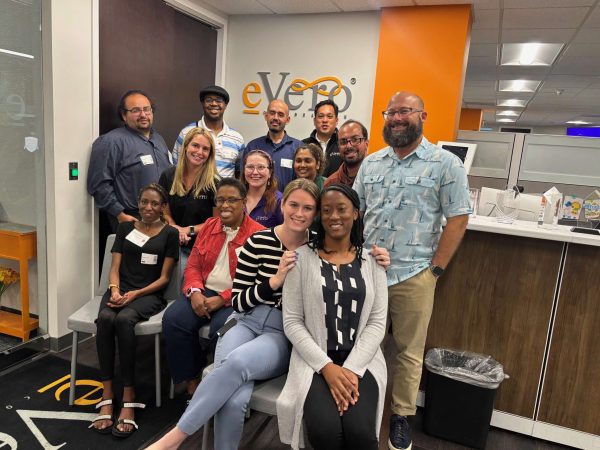
Joe and the eVero Outreach team pose for a group photo after a morning of mock interviews.
This is the second blog entry in a monthly series written by Joseph Malebranche, eVero’s Receptionist and Outreach Team member, sharing actionable advice and proven best practices to support job seekers as they search for opportunities and prepare for interviews.
Starting a job interview can feel exciting, and it is normal to feel nervous, too. One of the first things you will do when you meet an interviewer is introduce yourself. A professional introduction is a simple but important skill that can help you start your interview on a positive note.
Knowing how to introduce yourself and understanding why it is important can help you feel more prepared and confident when meeting a potential employer.
Why Is a Professional Introduction Important?
Your introduction is often your first interaction with an employer. First impressions can influence how someone views you during the beginning of an interaction. A friendly and professional introduction can show an employer that you are respectful, prepared, and interested in the opportunity.
A professional introduction can help you:
- Make a positive first impression
- Show respect for the interviewer
- Demonstrate communication skills
- Show confidence and professionalism
- Begin building a positive relationship with your employer
A good introduction can also help make the interview more comfortable. When you greet someone, introduce yourself, and communicate clearly, you are beginning the conversation in a respectful and welcoming way.
Remember, you do not have to be perfect. The goal is to show that you are ready to communicate and engage with the person you are meeting.
How Do You Give a Professional Introduction?
There are several simple steps you can follow when meeting an interviewer.
1. Greet the interviewer
Begin with a polite greeting. You can say:
“Good morning. My name is [your name]. It’s nice to meet you.”
You can also simply say:
“Hi, it’s nice to meet you.”
A polite greeting lets the interviewer know that you are ready to begin the conversation.
2. Shake hands when appropriate
If the interviewer offers their hand, you can respond with a handshake. A handshake should be brief and comfortable.
A handshake is one way to show that you are greeting the person and are ready to begin the interview. However, you do not have to shake hands if you are uncomfortable doing so. You can still give a professional introduction by smiling, making appropriate eye contact, and saying hello.
3. Make appropriate eye contact
Try to look at the interviewer while you are speaking and listening. Appropriate eye contact can show that you are interested in the conversation and paying attention.
You do not need to stare at the interviewer. It is completely okay to look away briefly, especially if you need a moment to think.
4. Smile and use a friendly tone
A smile and friendly tone of voice can help create a positive and welcoming interaction. You do not need to force a smile. Simply being friendly and respectful can help you make a good first impression.
5. Speak clearly and take your time
When introducing yourself, speak clearly and at a comfortable pace. If you are feeling nervous, take a breath before you begin.
It is okay to pause for a moment to collect your thoughts. You do not need to rush.
What Does a Professional Introduction Look Like?
Here is an example of how you might introduce yourself during an interview:
Interviewer: “Hi, it’s nice to meet you.”
You: “Hi! It’s nice to meet you, too. My name is Jordan. Thank you for meeting with me today.”
You can then follow the interviewer into the interview and answer their questions.
Your introduction does not need to be long. A simple, friendly, and respectful greeting is enough to get started.
How Can You Practice?
Practicing your introduction before an interview can help you feel more comfortable. You can practice with a family member, friend, support professional, or someone else you trust.
Try practicing:
- Saying your name
- Greeting someone
- Offering a handshake
- Making appropriate eye contact
- Smiling
- Speaking clearly
- Saying, “It’s nice to meet you”
You can also practice by role-playing a job interview or practicing your introduction in front of a mirror.
Remember
A professional introduction is both about what you do and why you do it.
How: Greet the interviewer, introduce yourself, offer a handshake when appropriate, make appropriate eye contact, smile, and speak clearly.
Why: These simple actions can help you make a positive first impression, show respect and professionalism, and begin your interview in a friendly and confident way.
Most importantly, be yourself. It is normal to feel nervous during an interview. You do not have to be perfect. Take a breath, introduce yourself, and remember that you have something valuable to offer.
A professional introduction is a small step, but it can help you start your interview feeling prepared and ready for the opportunity ahead.
Stay tuned for the next post in this series, where we’ll share more tips to help you navigate the job search journey with confidence.